10 Book Club Questions For The Covenant of Water by Abraham Verghese
- Posted:
- Updated: October 22, 2025
Table of Contents
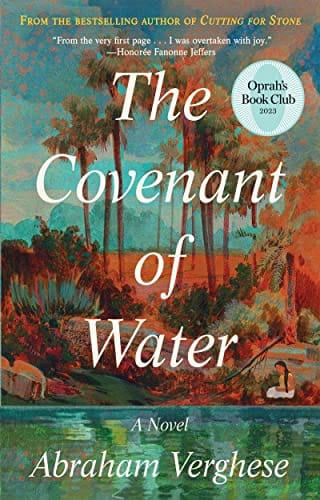
Abraham Verghese’s epic novel The Covenant of Water is a sweeping saga that spans three generations of the Parambil family in Kerala, South India. The tale weaves together themes of family, faith, love, loss, and the enduring legacy of inherited burdens. Verghese, the author of the critically acclaimed “Cutting for Stone,” has once again crafted a masterpiece that immerses readers in the vibrant and complex culture of Kerala, while exploring the depths of the human experience.
The Covenant of Water Discussion Questions
We have put together 10 book club discussion questions for the Covenant of Water that are free of spoilers as much as possible, and are designed to foster engaging conversations. We hope it helps you share your unique perspectives on the novel’s most compelling aspects.
- The “Condition” serves as a central theme throughout the novel, shaping the lives of multiple generations of the Parambil family. How does this inherited disorder serve as a metaphor for the burdens and legacies we inherit from our families?
- Do you believe Elsie’s decision to disappear and create a new life for herself were justified considering the societal stigma surrounding leprosy and her desire to protect her daughter?
- Discuss the evolution of Mariamma’s faith throughout the story. How does her understanding of God and grace shift as she navigates the complexities of life and death?
- The caste system in India plays a significant role in the lives of several characters, particularly Joppan and Shamuel. Analyze the ways in which the novel critiques the social hierarchies and injustices perpetuated by caste. How do characters like Uplift Master and Philipose challenge these entrenched systems?
- The novel explores the theme of motherhood through various characters, including Big Ammachi, Elsie, and Anna Chedethi. Discuss the different ways in which these women embody motherhood and the challenges they face. How does the concept of motherhood evolve throughout the story?
- Consider the various forms of social and political activism portrayed in this book, from Uplift Master’s efforts to improve Parambil to Lenin’s involvement in the Naxalite movement. Discuss the effectiveness of these different approaches to social change. Do you believe that individual actions or collective movements are more impactful in addressing systemic injustices?
- Analyze the different types of secrets kept by characters in the story and the motivations behind their concealment. How do these secrets ultimately bind or divide the family? Discuss the ethical implications of keeping secrets, particularly when they involve matters of health or identity.
- Explore the meanings behind various character names and nicknames, such as “Big Ammachi,” “Baby Mol,” and “Uplift Master.” How do these names reflect the characters’ personalities, roles within the family, and their journeys of self-discovery?
- The novel portrays various forms of disability and illness, including leprosy, cretinism, and the Condition. Analyze the author’s approach to depicting these conditions and the challenges faced by characters living with them. How does the novel contribute to a broader conversation about disability, stigma, and the human experience of illness?
- Music plays a role in the lives of several characters, from the Carnatic music lessons next door to Digby’s bungalow to Mariamma’s preference for opera. Discuss the different ways in which music serves as a source of comfort, inspiration, and cultural identity for the characters.
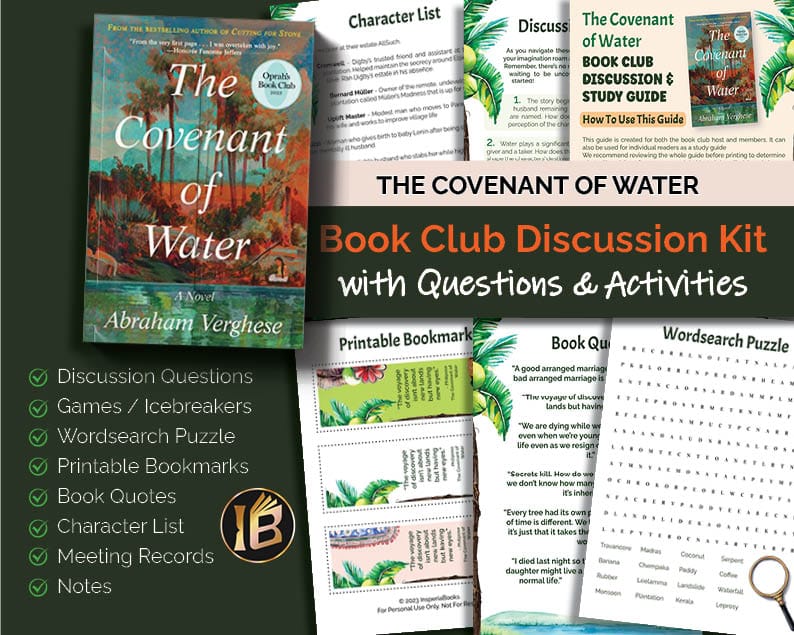
If you are seeking a truly immersive experience with this extraordinary novel, I highly recommend the The Covenant of Water Book Club Guide.
This comprehensive guide is a must-have for book lovers, book club members, and individual readers alike. It provides everything you need to host a lively and engaging book club meeting, including:
- Over 30 thought-provoking discussion questions in printable PDF format that will help you explore the novel’s themes.
- Fun icebreaker questions to get your discussion started.
- Challenging word search puzzles based on the novel’s characters and events.
- Delicious food and drink ideas inspired by the novel.
- Insightful book quotes with explanations to help you understand the novel’s deeper meaning.
- Meeting record templates to take notes and keep track of your discussions, and so much more!
People tell us our guides are perfect for hosting great book club meetings. They are also helpful for anyone reading the book alone and looking to get more out of the story.
Frequently Asked Questions
Is The Covenant of Water based on a true story?
While The Covenant of Water draws inspiration from the author’s own family history and experiences growing up in Kerala, it is ultimately a work of fiction. The characters and events are fictionalized, although they reflect the social, cultural, and historical realities of the time period and setting. The “Condition” described in the novel is based on a real medical disorder, neurofibromatosis type 2, but the specific family history and experiences of the Parambil family are fictionalized.
What is the disease / Condition in The Covenant of Water ?
“The Condition” in The Covenant of Water refers to a genetic disorder called neurofibromatosis type 2 (NF2). This condition is characterized by the growth of tumors on the acoustic nerves, which are responsible for balance and hearing.
What causes the drownings in The Covenant of Water?
The drownings in The Covenant of Water are caused by a rare genetic condition known as neurofibromatosis type 2 or NF2. In the novel, the condition is passed down through generations of the Parambil family. It leads to the development of tumors on the acoustic nerves, which are responsible for balance and hearing. These tumors disrupt the signals from the inner ear to the brain, causing dizziness and disorientation, especially in water. The affected individuals struggle to maintain their balance and orientation, making them more susceptible to drowning, even in calm or shallow water.
What medical condition did Baby Mol have in The Covenant of Water?
Baby Mol was diagnosed with cretinism. This is an outdated term for a condition caused by congenital hypothyroidism, meaning her thyroid gland was underactive from birth. This condition leads to stunted physical and mental development.
Conclusion
The Covenant of Water is a literary masterpiece that deserves to be savored, discussed, and celebrated. Not only because it is an Oprah Book Club pick but because it is a compelling and rich historical fiction novel that explores the depths of the human experience while transporting readers to the lush landscapes and rich culture of Kerala.
If you enjoy historical fiction with complex characters and a strong sense of place, you will likely find The Covenant of Water an enriching and enjoyable read.
Was this post helpful?
We’d love to hear from you : )
Wondering What to Read Next?
Discover your next book read tailored to suit you! No more long book recommendation quizzes that make your eyes go dizzy.
Our book recommendation engine knows exactly what book will captivate you next.
Simply tell us what you’ve loved reading, and well unveil a perfect match for your reading pleasure.
You will absolutely love it!
You may also like
If you enjoyed reading The Covenant of Water because of its historical setting, complex characters, and family themes, you may also enjoy these recommended titles:
- The Frozen River by Ariel Lawhon Book Guide – a historical fiction novel that explores a strong female protagonist (Martha Ballard) navigating medical dilemmas and social injustice.
- The Women by Kristin Hannah Book Guide – also shares the historical fiction genre and explores profound themes of resilience and women navigating loss.
- The Berry Pickers By Amanda Peters Book Guide – a deep family saga, focused on generational trauma and loss, similar to the Parambil family’s inherited burdens.
- The Briar Club by Kate Quinn Book Guide – a historical fiction novel focused on an unexpected sisterhood formed under duress, echoing the theme of women supporting one another (like Big Ammachi, Elsie, and Anna Chedethi).